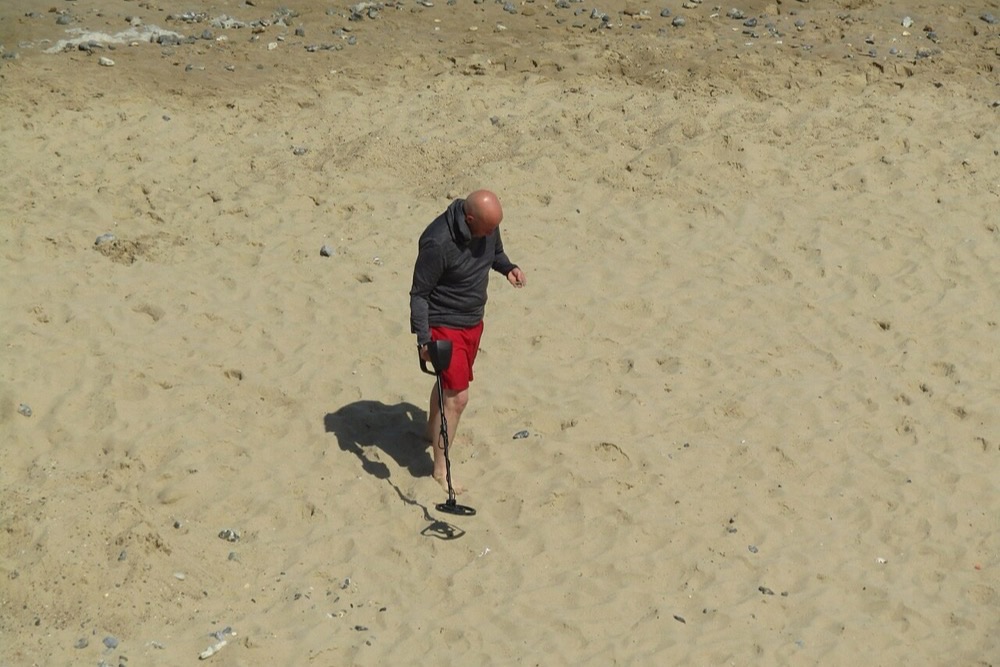
Children can start metal detecting from about six years old, in the garden or on a beach, with a starter detector that costs about £50. They need no licence, but they do need the landowner’s permission anywhere that is not your own garden, and an adult with them who knows the rules. A complete budget kit costs about £60 to £90.
Metal detecting suits children well. It is outdoors, it rewards patience with small surprises, and a button or an old penny is history they have found for themselves. It also goes wrong in predictable ways: a detector that is too heavy, a first trip with no finds, or an hour longer than their attention lasts. This guide is about getting those things right. If you only want to know which detector to buy, see our children’s detector guide.
The short answer
- Start at about six with a light starter detector. From about ten, most children can use a light full-size one.
- Start in your own garden, then try a beach.
- Bury a few coins first so the first session is a success.
- Keep it to an hour, less for younger children.
- Budget about £60 to £90 for a detector, a digging tool and something to keep finds in.
- An adult needs to know the rules on permission and reporting.
What age can children start?
| Age | What works | What to expect |
|---|---|---|
| About 4 to 5 | Helping an adult: digging, sorting and cleaning finds | They will not manage a detector for long, but they love the digging |
| About 6 to 9 | A light starter detector under about 600g | Shallow finds in gardens and on beaches. Short sessions |
| About 10 to 12 | A light full-size detector with an adjustable shaft | Can learn target tones and dig their own neat holes |
| 13 and over | A proper beginner’s detector | Ready for a club dig or farmland, with an adult |
Weight matters more than features. A detector that is too heavy is put down within twenty minutes.
A budget starter kit
How we chose: from manufacturers’ specifications and Amazon UK prices and ratings. We have not tested these ourselves.
First detector, ages about 6 to 9: National Geographic Starter Kit (about £50)
Weighs 544g, has an adjustable arm and comes with a trowel. The maker says it finds objects up to about 10cm deep, which is enough for gardens and beaches. It had 4.3 stars from 387 reviews when we checked.
A similar price, a long-established name: Bounty Hunter Junior (about £48)
A simple, light detector made for young children. See our under £100 guide for how it compares.
For an older child, or to share: SUNPOW OTMD13 (about £64)
The cheapest detector we would suggest for a child of ten or over. An adult can use it too. It had 4.4 stars from 481 reviews when we checked.
A digging tool for an adult to use: INCLY Double-Serrated Digger (about £17)
A hand digger for cutting a neat plug of turf. It has serrated edges, so it is one for the adult, not the child. Younger children can use the trowel from a starter kit.
For cleaning finds: Rock Ninja Detail Brush Set (about £7)
Soft brushes for getting soil off modern coins. It had 4.6 stars from over 3,000 reviews when we checked.
For keeping the best ones: Clear Coin Capsules (about £9)
Turns a pocketful of finds into a collection, which is what keeps children interested. It had 4.4 stars from 1,500 reviews when we checked.
Prices were last checked between September and November 2026 and will have moved.
What it adds up to
| Kit | Detector | Extras | Total |
|---|---|---|---|
| Youngest children | National Geographic kit £50, trowel included | Brushes £7, capsules £9 | About £66 |
| Older child | SUNPOW OTMD13 £64 | Digger £17, brushes £7 | About £88 |
You can spend nothing on the extras to begin with. An old trowel, a toothbrush and an egg box do the same jobs.
Where children can detect
The rules are the same for children as for adults.
- Your own garden. The best place to start, and no permission is needed.
- A relative’s or friend’s garden, with their permission.
- Beaches. Much of the foreshore is managed by the Crown Estate, which allows detecting. Some council and private beaches have their own rules. See our guide to detecting on beaches.
- Parks, fields and woods all need the landowner’s permission. Many councils do not allow detecting in parks. Our permission guide explains how to ask.
- Not allowed: National Trust land, scheduled monuments and protected sites. See where you can detect.
The rules a parent needs to know
- No licence is needed in England, Wales or Scotland. Northern Ireland has stricter rules on searching for archaeological objects.
- Permission comes first on any land that is not yours.
- Treasure must be reported within 14 days. Our guide to finding treasure explains what counts.
- Old or unusual finds are worth showing to your local Finds Liaison Officer through the Portable Antiquities Scheme. They are usually glad to see young finders.
- Insurance. NCMD membership costs £8 a year and includes public liability cover, and a member can add up to three children aged 10 to 16 free of charge.
Keeping it safe
- Stay with them. Detecting is absorbing, and children wander with their eyes on the ground.
- An adult does the digging with sharp tools. Finds include broken glass, rusty nails and wire, so gloves are sensible.
- Never handle anything that could be ammunition or an explosive. Leave it where it is, move away and call the police.
- On beaches, check the tide times and keep well away from cliffs.
- Fill in every hole. An open hole is a hazard for people and animals, and filled holes keep landowners willing.
- Dress for it. Wellies, a hat, sun cream or waterproofs, and a drink.
Making the first trip work
- Salt the garden. Bury five or six coins a few centimetres down before they come out. A first session with finds is what makes a second one happen.
- Show them the sounds. Wave a coin, a key and a nail under the coil so they hear the difference.
- Let them dig. For most children the digging is the best part.
- Stop while it is still fun. Forty minutes to an hour is plenty.
- Finish with the finds. Wash the modern coins, lay everything out and let them choose a favourite.
What they will actually find
Mostly modern coins, ring pulls, bottle tops, foil, nails and the odd toy car. That is normal, and children mind far less than adults do. On beaches, expect coins and lost jewellery near where people sit. Older finds such as buttons, buckles and pre-decimal coins turn up in gardens of older houses and on farmland. Our guide to common finds shows what to look out for.
Five ways to keep them interested
- A finds book. Date, place and a drawing of each find.
- A treasure hunt. Hide tokens for a birthday party or a rainy half-term.
- A challenge. A coin from every decade, or the oldest date they can find.
- A map. Mark where each find came from in the garden.
- A junior club dig. Many clubs welcome children with a parent.
When to upgrade
If they are still keen after a few months and frustrated by how little the starter detector finds, that is the time. A light proper detector finds deeper targets and tells junk from coins far better. Our children’s detector guide and beginner’s guide cover the next step.
Frequently asked questions
What age can a child start metal detecting? About six with a light starter detector. Younger children enjoy helping an adult dig and sort the finds.
Is metal detecting safe for children? Yes, with an adult present. The adult should handle sharp digging tools, check finds for glass and sharp metal, and fill in holes.
Do children need a licence to metal detect in the UK? No. They do need the landowner’s permission on any land that is not their own, the same as adults.
How much does it cost to get a child started? About £50 for a starter detector with a trowel, or roughly £60 to £90 with a few extras.
Where can I take my child metal detecting? Your own garden first, then a beach where detecting is allowed. Parks and fields need the landowner’s permission.
What if my child finds something valuable? If it could be treasure, it must be reported within 14 days. For anything old or unusual, contact your local Finds Liaison Officer.